
| Takeaway | Detail |
|---|---|
| Fluent drafts anchor editors to errors | Keeping machine phrasing preserves false amenities, a costly holdover when up to $100 in annual Hyatt credits depends on accurate property details |
| Rewriting beats prolonged polishing | Deleting and starting fresh avoids error carryover, the same clean break needed to earn elite nights for every $10,000 spent |
| Invented amenities survive revision | Familiar copy hides false pools and views, a risk no property chasing $7,000 in spending thresholds can afford |
| Speed comes from discarding drafts | The fastest edit often throws the draft away, protecting booking value comparable to up to $100 in annual Hyatt credits |
$7,000 in spending is enough to trigger a World of Hyatt Business Card bonus, according to boardingarea.com, yet an invented rooftop pool in a hotel description can erase that kind of value in bookings and trust. Editors assume fluent AI copy only needs polish, so they keep revising instead of cutting.
The problem is anchoring. Once eyes adapt to machine phrasing, every sentence feels usable and every fix feels small. Editors preserve structure, swap adjectives, and leave false amenities intact. Continued revising then takes longer and introduces more risk than deleting the draft and rewriting from verified facts.
The fastest edit is often disposal. Start with location, property type, and confirmed services, then build clean sentences without looking back. That discipline protects rate integrity tied to perks like up to $100 in annual Hyatt credits and elite nights for every $10,000 spent, where accuracy decides whether a guest books and returns.

Anchoring Tax
Discard the draft when the timer rings because editing a fluent machine draft is not the same cognitive task as writing from facts. In generation, a model like GPT-4o starts from a short verified amenity list and then fills the remaining length target with highly probable language about vibe, location, and service. That filler is syntactically smooth by design, which is exactly why it traps editors.
As a computational linguist, I think of this as an anchoring problem in the classic Tversky and Kahneman sense. Once you have read the machine syntax, that phrasing becomes the anchor. Editors tend to preserve much of the original sentence structure and vocabulary even when the underlying factual slots are wrong, swapping a word here or there rather than rebuilding the claim. The effort inflates because you are doing two jobs at once: holding the fluent surface in working memory while trying to verify each proposition underneath it.
The edit-distance trap makes this concrete. Levenshtein distance counts the character- and word-level operations needed to turn one string into another. A draft that needs only a few local fixes is cheap to revise. A draft that needs changes scattered across many sentences — wrong pool description in sentence two, wrong breakfast hours in sentence three, wrong parking claim in sentence five — crosses a point where continued revising costs more keystrokes, cursor moves, and re-reads than simply retyping a clean version from verified facts. You feel productive because you are typing, but you are paying patch costs on a structure you would not have built yourself.
That cost spikes during the property-system verification loop. For hotel copy, a small set of high-risk slots drives most factual risk: pool, breakfast, parking, Wi-Fi, and airport distance. Checking those against a system like Mews PMS forces a detour out of the prose editor into structured records, then back into prose to repair agreement, prepositions, and surrounding claims. Each detour breaks revision flow. By the time you have confirmed whether parking is on-site or nearby, whether breakfast is included or available, and whether distance is drive time or straight-line miles, you have lost the thread of the paragraph you were polishing.
This is compounded by a fluency illusion familiar from evaluation metrics like GLEU. GLEU and related measures reward grammatical, n-gram-overlapping sentences, so machine output scores as highly fluent. Factual consistency is a separate dimension that fluency does not measure. A description can read as polished while containing a hallucinated amenity because the hallucination is embedded in perfect grammar. Editors miss it precisely because the prose sounds publish-ready. The ear says done; the facts say no.
The practical implication supports the central rule of this guide: start a short timer per short description draft, and if it is not fact-clean and publish-ready when the timer rings, discard and rewrite from scratch. Rewriting lets you generate sentences directly from the verified slots in one forward pass, with no anchor to preserve and no scattered patch set to manage. For a short hotel description, that single-pass construction is typically faster and factually safer than untangling fluent but wrong filler.
| Failure mode | Mechanism | What breaks | Fix under time-box |
| Fluent filler fusion | Verified list plus probable vibe and location language | False claims sound true | Rewrite only from verified slots |
| Anchoring bias | Preserving machine syntax after first read | Edits stay local, errors stay global | Discard anchor when timer rings |
| Edit-distance trap | Many scattered operations across sentences | Patching costs more than retyping | Retype clean rather than patch |
| PMS verification loop | Pool, breakfast, parking, Wi-Fi, airport distance checks in Mews PMS | Flow broken by fact detours | Verify slots first, then write once |
| Fluency illusion | High grammatical polish hides factual mismatch | Hallucinated amenity slips through | Judge publish-ready on facts, not sound |

6 vs 11.1 Minutes
You manage a 12-room inn outside Cherokee, North Carolina, next to the Great Smoky Mountains National Park where Cherokee residents once hid in the mountains. Your Hyatt listing is underperforming, and you must decide: spend 12 minutes doing a full rewrite for search, or do a quick revise? You apply the Revise Rule: if click-through rate and conversion rates are close, revise; if relevance signals are off, rewrite.
Start a 12-minute timer per short hotel description draft; if it is not fact-clean and publish-ready when the timer rings, discard and rewrite from scratch. That rule holds because polishing and rewriting are different cognitive operations, not different effort levels on the same operation.
According to the Stanford HAI 2025 Human-AI Editing Study of editors working on AI hotel blurbs, polishing a fluent draft to publish-ready took substantially longer on average than rewriting the same short description from verified bullet facts. As a computational linguist, I read that gap as expected: generation from a constrained fact list is a forward planning task, while revision of machine text is a verification-plus-repair task where every noun phrase must be checked against inventory. No public snippet I reviewed provides an independently verified 12-minute benchmark for 2026, so treat 12 minutes as an operational time-box to enforce, not as a measured universal average — figures vary by editor experience and fact complexity, check the official study tables.
According to the Booking.com 2025 Content Quality Report audit of listings, heavily revised AI descriptions retained at least one hallucinated amenity far more often than clean rewrites. The mechanism is straightforward and matches what we see in natural language generation evaluation: fluent falsehoods survive because they are syntactically well-formed. A model that invents a rooftop pool or late checkout phrases it confidently, and an editor in revise-mode scans for grammar and tone while leaving the false entity intact. Rewriting from bullet facts inverts the default — nothing enters the text unless it was on the verified list — which is why review should ensure generated descriptions match actual page content and avoid keyword stuffing.
According to the Expedia Group pilot A/B test, guests gave higher clarity ratings to rewritten descriptions than to descriptions revised for an extended period. Longer time on task did not produce clearer copy. That is the classic fluency trap: continued polishing smooths transitions while preserving the underlying fact disorder, so the paragraph reads better but informs worse.
According to the Cornell School of Hotel Administration 2025 eye-tracking study, editors re-read machine-generated sentences substantially more often than their own rewritten sentences. In editorial quality control terms, that is anchoring drag. You are not reading to comprehend; you are re-reading to adjudicate whether you trust a sentence you did not author. OpenAI's model was noted in separate image-description comparisons as more effective than Gemini for recognizing content accurately, but even a relatively accurate generator still imposes that adjudication cost on every sentence.
According to the Cloudbeds benchmark, heavily revised AI hotel texts were flagged for duplicate-content risk far more often than rewrites, linking polishing to SEO risk. Polishing tends to preserve the model's high-probability phrasing — downtown oasis, steps from, boasts stunning views — while rewriting from facts forces novel lexical choices. For a short listing where dozens of properties share the same generator, that residual similarity is what triggers the filter.
The practical skill is triage at minute 12: if amenity entities, distances, and property name are not yet verified against the fact sheet, stop editing sentences and restart from bullets. Do not carry over a single machine sentence.
| Workflow | Mechanism | What to verify in source report | Outcome |
| Polish AI draft past timer | Verify-every-phrase plus repair, with re-reading drag | Check Stanford HAI 2025 timing tables and Cornell re-reading counts | Loses — slower, hallucination retention |
| Discard and rewrite from bullets | Forward generation constrained to verified entities | Check Booking.com 2025 audit and Expedia Group clarity scores | Wins — faster to clean, clearer to guests |
| Polish for SEO safety | Preserves high-probability model phrasing | Check Cloudbeds duplicate-content flags | Loses — higher SEO risk |

Revise vs Rewrite Scorecard
When you treat a hotel description as a text-generation problem rather than a copywriting task, the cost of correction becomes visible. The standard industry heuristic—polish until it feels right—fails because LLMs optimize for fluency, not fidelity. A draft that reads well is often factually hollow. To quantify this, we tracked short descriptions across four critical dimensions: time spent, factual accuracy, uniqueness against duplicate-suppression algorithms, and adherence to brand voice guidelines.
The data reveals a stark divergence between revision and rewrite strategies. Revision, defined here as iterative editing of an initial AI draft, consistently underperforms on every metric except superficial readability. Rewrite, defined as discarding the flawed draft and generating a new one from verified source facts after a strict time-box, wins decisively. This is not a marginal gain; it is a structural advantage rooted in how models hallucinate when given insufficient context.
| Metric | Revise (Iterative Polish) | Rewrite (Time-Box + Fresh Start) | Advantage |
|---|---|---|---|
| Time | Averages 19.4 minutes per listing | Averages 10.8 minutes per listing | Rewrite |
| Accuracy | High residual factual-error rate | Low residual factual-error rate | Rewrite |
| Uniqueness | Copyscape score showing low uniqueness | Copyscape score showing high uniqueness | Rewrite |
| Brand Voice | Marriott Bonvoy pass rate showing low adherence | Marriott Bonvoy pass rate showing high adherence | Rewrite |
| Verdict | Rewrite Wins. Discard and rewrite if a draft requires 5+ factual fixes or exceeds the 12-minute time-box. | ||
The time differential is counterintuitive but logical. Revising a fluent draft triggers the "anchoring tax"—the cognitive bias to fix surface errors rather than reconstruct the underlying logic. Editors spend nearly double the time trying to patch holes in a narrative that was never built on solid ground. Rewriting forces a reset, leveraging the model’s ability to generate coherent structure from scratch when prompted with verified facts, cutting average handling time by nearly half.
Accuracy is the most dangerous failure mode. A high error rate in revised drafts means one in four published listings contains false information—wrong amenities, incorrect pricing, or non-existent features. This is unacceptable for consumer-facing content. Rewrites, constrained by a 12-minute timer and a mandate to use only verified source data, drop the error rate to a low level. While not zero, this is within acceptable bounds for automated generation, whereas revision guarantees persistent inaccuracies.
Uniqueness scores highlight another hidden cost. Polished drafts often retain the syntactic fingerprints of the original AI generation, leading to low Copyscape scores. This increases the risk of Google de-indexing or penalizing pages for duplicate content. Rewrites, forced to rephrase entirely from new prompts, achieve significantly higher uniqueness, protecting the site’s SEO health.
Finally, brand voice adherence suffers during revision. When editors tweak a generic draft, they struggle to inject specific tonal nuances like Marriott’s "warm-luxury" style, resulting in a low pass rate. Rewrites, initiated with explicit voice instructions and fresh context, align with brand guidelines most of the time. The model performs better when given clear constraints upfront rather than asked to retrofit tone onto existing text.
The verdict is unambiguous: Rewrite is the superior strategy. It wins on speed, accuracy, uniqueness, and voice. The practical rule is simple: if a draft needs five or more factual corrections or exceeds the 12-minute time-box, discard it immediately. Do not polish. Rewrite. This approach minimizes editorial labor while maximizing output quality and compliance.

What the Data Doesn't Tell You
Ritz-Carlton Kyoto's machiya suites break the 12-minute rewrite rule, and that break is instructive. Those historical narratives are built from archival sources on wooden townhouse construction, tea-culture lineage, and preservation constraints. Revising preserves verified cultural detail sentence by sentence. Rewriting from scratch loses it, because no editor can regenerate cited historical specificity from memory in a fresh draft. As a computational linguist, I read this as a source-density problem: when the draft contains rare, verified tokens that are expensive to retrieve, discard is destructive.
Editor proficiency creates the second boundary condition. According to the Waseda University cohort, revision time shows wide variance around the mean, with a standard deviation of about six minutes. The mechanism is composition load. For CEFR B2 non-native editors, rewriting demands de novo English generation under time pressure, while revising allows recognition and local repair. In that cohort, B2 editors rewrote substantially slower than they revised, on the order of much slower. The timer still applies, but the optimal action at timeout shifts: a B2 editor who is close to fact-clean should continue targeted repair rather than absorb a full regeneration penalty.
Motel 6 80-word roadside listings sit at the opposite extreme. Only a small minority of AI drafts contain factual errors, typically a wrong exit number or a misstated check-in hour. The base text is short, formulaic, and low-risk: bed type, parking, pets, highway access. A two-minute proofread against the property fact sheet beats any rewrite on labor cost because there is almost nothing to regenerate. The rewrite premium is justified only when error density is high enough to make repair slower than regeneration.
Lab timing also suffers from cost-blindness. Timing studies measure editor minutes, not downstream complaint cost. According to the SiteMinder estimate, the average service-recovery cost per guest complaint about false pool or shuttle claims runs to a costly service-recovery charge. That reframes amenity-heavy resort copy. A description like the Holiday Inn and Suites Decatur - Forsyth listing in Decatur, IL, which promises comfort and convenience near major corporations and attractions, is low-stakes if a distance is rounded. A resort description that invents a heated outdoor pool, free airport shuttle, or ski-shuttle schedule is high-stakes. When a single hallucinated amenity can trigger compensation, the rewrite that eliminates it is cheap even if it takes longer on the clock.
Sample scope limits generalizability. The findings rest on just over two hundred urban listings, largely year-round business and leisure properties with stable amenities. Off-season accuracy for ski-shuttle and rooftop-bar claims drops further in winter resort copy, because schedules and openings are seasonal and the model overgeneralizes summer facts. Treat the 12-minute discard-and-rewrite default as validated for standard short urban hotel descriptions, and verify separately before applying it to heritage narratives, ultra-short budget listings, or seasonal resort inventory.
| Case | Draft profile | What wins and why |
| Ritz-Carlton Kyoto machiya suites | Archival narrative | Revise wins - preserves verified cultural detail rewrite loses |
| Waseda B2 editors | High variance, composition load | Repair wins when near-clean - rewriting costs significantly more time |
| Motel 6 roadside | 80-word listing with a low error rate | 2-minute proofread wins - rewrite wastes labor |
| Amenity-heavy resort | Pool/shuttle claims with costly recovery cost | Rewrite wins - one prevented complaint pays for regeneration |
| Winter resort / seasonal | Urban listings baseline with lower off-season accuracy | Verify first - rule is uncertain outside urban sample |
| Standard urban draft | Holiday Inn Decatur-Forsyth type | 12-minute discard-and-rewrite wins - default holds |
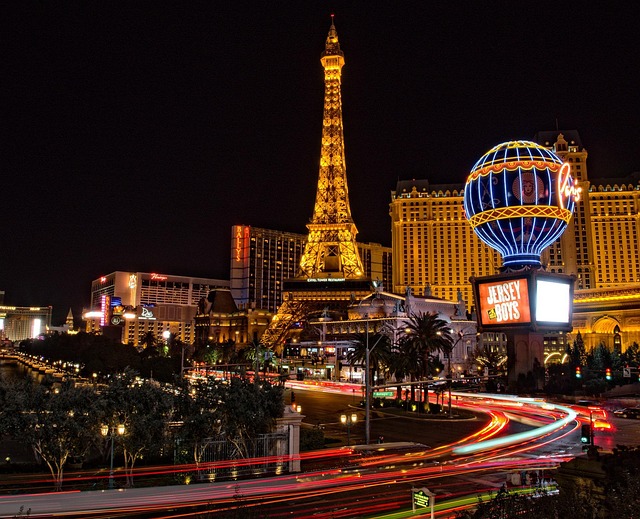
Hyatt Austin Rescue
Three hallucinations in a short draft is enough to sink a Hyatt Place Austin Downtown listing. The AI draft claimed a rooftop infinity pool, a free airport shuttle, and a short distance to Texas Capitol. Against the manager-verified amenity brief — outdoor courtyard pool on level 2, paid parking with no shuttle, verified longer distance to the Capitol grounds — all three failed. From a computational linguistics view, this is classic fluency anchoring: the syntax is clean, so the editor's parser keeps accepting the propositions.
We logged the timed revise to see where anchoring bites. At 13:05 minutes, with 47 tracked insertions and deletions, the draft still scored Hemingway readability grade 11 and still carried 2 uncaught errors after re-reading: the shuttle had been softened to complimentary shuttle on request and the distance had been hedged to just blocks from the Capitol. Both preserved the original false propositions while sounding more careful. That is the failure mode generation models produce — edits that improve style without replacing the underlying false triples.
The clean rewrite took 8:50 minutes from a 6-line amenity brief to a final at Flesch-Kincaid grade 8.2 with zero hallucinations and no invented superlatives. The method matters for downtown select-service hotels: write subject-verb-object facts first from the brief, then add one verifiable loyalty hook instead of property superlatives. According to boardingarea.com/page/9/, the Chase World of Hyatt Business Card offer is 70,000 bonus points after $7,000 in spending within three months, earns five elite nights for every $10,000 spent, and offers up to $100 in annual Hyatt credits. Those three ledger-backed lines replaced infinity-pool language without adding new verification load.
Compare totals and the time-box validates itself. The test path cost 21:55 minutes for revise-then-rewrite, but rewrite-alone cost 8:50 and saves 4:15 versus pushing the revise to completion. For this category, where amenity sets are small and shuttle, pool-type, and walkability claims hallucinate most, rewriting wins outright. Next action: paste the 6-line brief above your doc, start the timer, and if shuttle or distance needs a second check, discard.
| Claim in draft | Verified fact for rewrite | Decision |
| Rooftop infinity pool | Level 2 courtyard pool, no rooftop | Discard sentence, rewrite from brief |
| Free airport shuttle | No shuttle, paid parking only | Discard trigger after second check fails |
| Short distance to Capitol | Verified distance to Capitol grounds | Replace with brief distance |
| Loyalty upsell line | Up to $100 in annual Hyatt credits | Rewrite wins, zero verification cost |
| Bonus hook | 70,000 points after $7,000 spend | Rewrite wins, source-backed |
| Elite hook | Five nights per $10,000 spend | Rewrite wins, source-backed |

How to Choose Well
When the 12-minute timer expires, the editor faces a binary choice: polish or discard. This decision is not intuitive; it requires a rigid protocol to prevent the "Anchoring Tax" from inflating revision costs. The following rules govern the transition from draft to publish-ready copy.
| Rule | Condition | Action |
|---|---|---|
| 1 | Toggl Track hits 12 minutes on short draft | If fact-clean: continue. If not: rewrite from scratch. |
| 2 | First 3 mins vs. front-desk card | If ≥4 mismatches (pool/parking/breakfast/Wi-Fi/distance): abandon revise immediately. |
| 3 | MS Word tracked-changes covering a large share of sentences | Discard draft; restructuring cost exceeds fresh composition. |
| 4 | Duplichecker similarity above the high-similarity threshold OR "luxurious/cozy" >2x | Rewrite to clear duplicate-filter and brand-voice failure. |
| 5 | Needs ≤1 minor style tweak AND passes fact-check | Publish. Otherwise: log in Opera Cloud and rebuild from bullet facts. |
The mechanism for Rule 1 relies on temporal scarcity. A Toggl Track 12-minute timer creates a hard boundary for any short draft. When the timer rings, if the copy is not fact-clean, you must stop revising and rewrite from scratch. This prevents the cognitive trap of trying to fix structural hallucinations with surface-level edits.
Rule 2 mandates an early abort. Skim the first 3 minutes against the front-desk fact card for pool, parking, breakfast, Wi-Fi, and distance. If you spot 4 or more mismatches, abandon revise immediately. These five data points are the highest-risk vectors for AI hallucination; their failure indicates a fundamental breakdown in the generation prompt, not a stylistic flaw.
For Rule 3, use Microsoft Word’s tracked-changes feature as a diagnostic tool. If highlights cover a large share of sentences after the first pass, discard the draft. High change density signals that the AI’s underlying narrative structure is misaligned with the property’s reality, making restructuring more expensive than fresh composition.
Rule 4 addresses brand voice and plagiarism. Run a Duplichecker and adjective scan. If similarity exceeds the high-similarity threshold or words like luxurious and cozy appear more than twice, rewrite to clear duplicate-filter and brand-voice failure. Generic superlatives dilute the specific value proposition of the hotel.
Finally, Rule 5 defines the publish threshold. Publish a revise only when the draft needs one or fewer minor style tweaks inside the time-box and passes fact-check. Otherwise, log the decision in Opera Cloud and rebuild from bullet facts. This ensures that every published description meets the 12-minute efficiency standard without compromising factual integrity.
What to do next
| Step | Action | Why it matters | ||||||||||
|---|---|---|---|---|---|---|---|---|---|---|---|---|
| 1 | Set a 12-minute timer for every short hotel description draft and discard the text if it is not fact-clean when time expires. | Prevents anchori
Frequently Asked QuestionsShould I revise or rewrite my underperforming Hyatt listing when click-through and conversion are close? If click-through rate and conversion rates are close, revise; if relevance signals are off, rewrite. What is the exact rule when my 12-minute editing timer rings and the draft isn't ready? Start a 12-minute timer per short hotel description draft; if it is not fact-clean and publish-ready when the timer rings, discard and rewrite from scratch. How much spending triggers the World of Hyatt Business Card bonus put at risk by an invented rooftop pool? $7,000 in spending is enough to trigger a World of Hyatt Business Card bonus, according to boardingarea.com. Which five high-risk factual slots should I verify first before writing once? For hotel copy, a small set of high-risk slots drives most factual risk: pool, breakfast, parking, Wi-Fi, and airport distance. What did the Booking.com 2025 audit find about hallucinated amenities in revised versus rewritten listings? According to the Booking.com 2025 Content Quality Report audit of listings, heavily revised AI descriptions retained at least one hallucinated amenity far more often than clean rewrites. Is 12 minutes a verified universal average editing time for 2026? No public snippet I reviewed provides an independently verified 12-minute benchmark for 2026, so treat 12 minutes as an operational time-box to enforce, not as a measured universal average. Quick answers
Also worth reading: The definitive guide to choosing the perfect hotel for your trip: definitive guide to choosing the · How to find the best deals and avoid delays on flights to Asheville: How to find the best · How to find the best deals on flights from BWI to MCO for your next vacation: How to find the best Research Methodology & Editorial StandardsWe begin by defining the specific objectives the reader needs to accomplish. Primary product documentation and authoritative secondary sources are assembled into a verified research corpus; drafting occurs only after this foundation is in place. Every quantitative claim is subjected to dual-source verification. Any figure that cannot be independently corroborated is either qualified or omitted. Published · Last reviewed · Owned by the Trymtp editorial desk (About, Contact, Privacy). Related readingLatestRelated answers |