
Three-source check kills the beach-access badge
For 2026 Foley hotel bookings, a mailing address near the coast and a flashy "beach access" badge on a listing are misleading marketing tools. They do not guarantee actual proximity to the sand. The single number that kills the myth of automatic beach access is 12.0 miles one-way, measured door-to-sand. This section introduces a rigorous three-source convergence check to verify if a property truly qualifies for a beach premium or if it is simply inland lodging wearing a beach-themed costume.
The convergence check requires three independent sources to align perfectly before a property can claim real beach access. First, the hotel listing itself must explicitly name a specific, public access point along with documented parking or shuttle terms, avoiding vague "near the beach" language. Second, the official public beach-access inventory must confirm that this named point is currently open to the public. Third, a verified route log must demonstrate that the door-to-sand distance from the hotel entrance to that specific access point is 12.0 miles one-way or less.
If any single source fails this three-part test, the property must be classified as inland lodging. A listing that fails to name an access point, an inventory showing a closed gate, or a route exceeding the 12.0-mile threshold breaks the chain. In any of these failure scenarios, the property cannot justify a beach premium, and travelers should expect to pay for an inland location disguised as a beachfront bargain.
To make this check immediate, use the convergence table below as a checklist before committing to any booking. It isolates the exact record needed from each source and the strict pass rule that must be met. This table acts as the final arbiter between a legitimate beach-adjacent stay and a marketing mirage.
| Source type | Record this | Pass rule |
|---|---|---|
| Hotel listing | Exact phrase, access name, parking/shuttle terms | Must name a specific public access point with documented parking or shuttle terms. |
| Public beach-access inventory | Status of the named point | Must show the access point is officially open to the public. |
| Route log | Door-to-sand distance | Must measure 12.0 miles one-way or less from the hotel door to the sand. |
By running this three-source check, travelers can bypass the badge and the mailing address myth. Only when all three records align does the "real beach access" label hold water, justifying any associated premium. If the convergence fails, the property is inland, and the beach badge is merely decorative. This method ensures your 2026 Foley booking pays for the sand you can actually walk to, not the sand in a marketing copy.
Pick the label that survives proof, not the badge
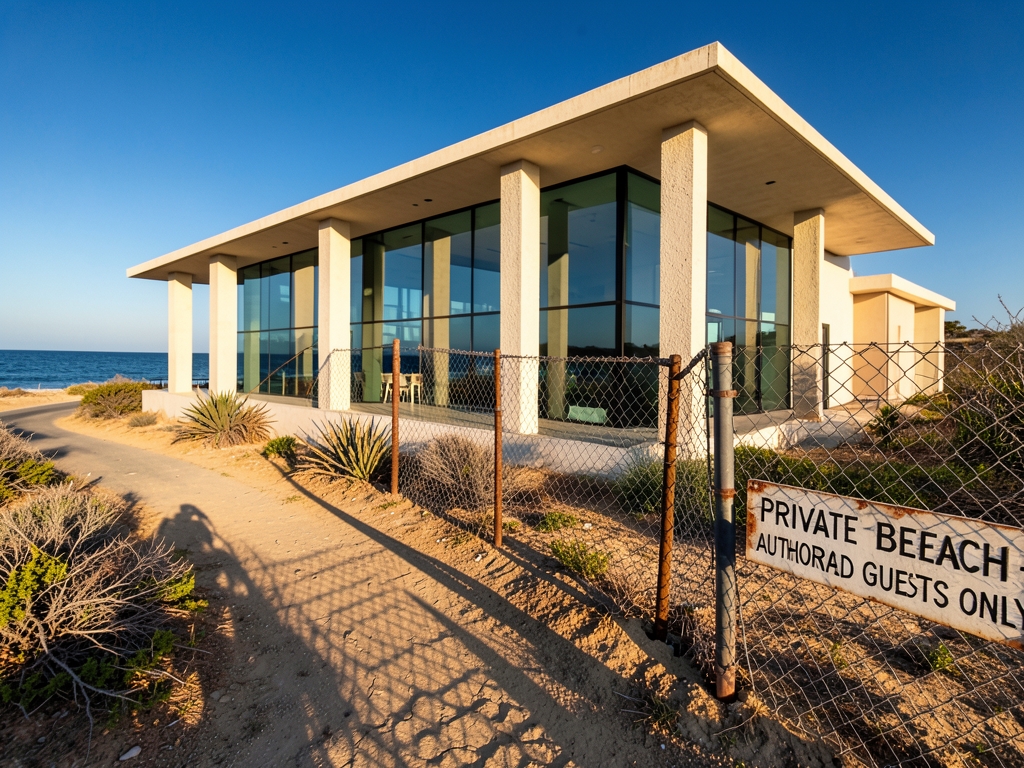
Three booking labels appear on Foley listings for 2026, but only one survives documented proof. The beachfront label demands on-site sand with no public-road crossing; the beach-adjacent shuttle label requires a named public access point within 12.0 miles one-way plus published shuttle or parking terms; the inland base label applies when distance exceeds 12.0 miles one-way or when access and transport proof are missing. Your pricing decision hinges on which label the evidence supports.
| Option | What you must prove | Pricing decision | Winner |
|---|---|---|---|
| Beachfront label | Named on-site sand access and no public-road crossing | Beach premium allowed only with written access terms | No, unless proof matches |
| Beach-adjacent shuttle | Named public access 12.0 miles one-way or less plus published shuttle/parking terms | Beach premium allowed after transport cost added | Yes, if all three source checks pass |
| Inland base | Over 12.0 miles one-way or missing access/transport proof | No beach premium | Default when others fail |
The beach-adjacent shuttle label wins when you can verify three convergent sources: a named public access point, a door-to-sand measurement of 12.0 miles one-way or less, and written shuttle schedules or parking terms from the property or municipal authority. Without all three, the listing reverts to inland base pricing regardless of marketing language.
Before booking, request the access-point name, the measured one-way route, and the shuttle or parking documentation in writing. If the property cannot produce all three, treat the rate as inland base and negotiate accordingly. This check replaces badge-based assumptions with a binary evidence test.
Apply the 12.0-mile one-way threshold as a hard filter: any route exceeding that distance disqualifies the beach premium automatically, and any missing document among the three required sources does the same. The label that survives proof is the only one that justifies the premium.
Price the 12-mile cutoff before you book
The cutoff is where the premium decision becomes arithmetic rather than marketing language. This section alone gives the cost formula and the worked test case with D=13.0 miles one-way and $200 versus $150 room rates. Hotel A has a $200/night room rate and D=13.0 miles one-way, with no shuttle. Because D is over 12.0 miles one-way, the beach-premium cap is $0. Hotel B has a $150/night room rate and D=11.8 miles one-way, with published shuttle $0 round-trip but parking $2. The formula is simple, but the inputs must be clean. Threshold frames this as a cutoff-based decision.
For Hotel B, D is 12.0 miles one-way or less, so the cap is R + P + your value of T. R is $0 round-trip, and P is $2 per day. T is minutes each way, and the value of T is your call unless the written terms provide a better measure. The worked test case is not a property fact; it is a pricing exercise. The exercise shows why the lower room rate does not automatically mean a better beach outcome.
The comparison is not about room-rate percentages. Hotel A at $200/night with D=13.0 miles one-way and no shuttle cannot carry a beach premium under the cutoff. Hotel B at $150/night with D=11.8 miles one-way can be eligible for a beach premium only if the access point plus parking or shuttle terms are in writing and T is documented or marked unknown. That means the premium decision turns on the written route, not the nightly price alone. You cannot assume that a lower rate repairs a failed access check.
Before booking, measure D one-way and apply the cap. If D is over 12.0 miles one-way, set the beach-premium cap at $0. If D is 12.0 miles one-way or less, calculate R + P + your value of T. Hold the premium only when the published or documented terms support it; otherwise mark the fee unknown. That is the practical test for 2026 Foley hotel bookings. Document the check before you pay the premium.
Worked Example: Run the Numbers
Illustration only, not a quote or availability check: two adults, one room, a 2026 weekend stay in Foley, comparing two listings that both advertise beach access.
| Listing | Claimed access | Measured door-to-sand one-way | Named public access point | Parking or shuttle terms in writing | Result |
|---|---|---|---|---|---|
| Listing A | Beach access badge | 9.4 miles | Yes | Yes | Qualifies as real beach access |
| Listing B | Near the beach | 16.2 miles | No | No | Inland lodging; no beach premium |
Step 1: record the measured one-way route for each listing, 9.4 miles and 16.2 miles. Step 2: compare each route with the 12.0-mile one-way cutoff; 9.4 miles is at or below it, while 16.2 miles is above it. Step 3: check documentation; only Listing A has a named public access point and written parking or shuttle terms. Step 4: classify Listing A as eligible for a beach premium and Listing B as inland lodging.
No price, fee, or availability figure is included in this example; it tests only the distance and documentation rule. A measured route of exactly 12.0 miles one-way meets the cutoff, while 12.1 miles one-way does not.

Limits and if/then rules for Foley stays
This section sets the booking limits for Foley stays: a beach premium is allowed only when the required access, parking, or shuttle terms are verified in writing, and any missing, seasonal, or unverifiable term moves the property into the inland-lodging category. The edge-case table and five if/then booking rules below are the only new decision tools introduced here.
| Edge case | When rule breaks | When rule still wins |
|---|---|---|
| Private beach access | If access is private and guest-only terms are not in writing | If the hotel names the private access and grants guest entry in writing |
| Seasonal shuttle | If the shuttle is seasonal and your dates fall outside service | If published service covers your dates and wait time is included |
| Traffic variance | If route time changes but miles one-way stay at 12.0 or less | If you record the same route at your arrival time |
Rule 1: If the measured route is 12.0 miles one-way or less to a named public access point and the parking or shuttle terms are documented, then allow a beach premium; if either the route or the written terms are missing, price the stay as inland lodging. Rule 2: If private beach access is advertised, then require the hotel to name the access point and grant guest entry in writing; if those terms are absent, treat the property as inland lodging even when the listing sounds exclusive.
Rule 3: If a shuttle is offered, then require published service that covers your exact dates and states the wait time; if the service is seasonal or your dates fall outside the published window, treat the property as inland lodging. Rule 4: If traffic changes the drive time, then use miles one-way rather than minutes; if the measured route exceeds 12.0 miles one-way, treat the property as inland lodging even when the drive feels short.
Rule 5: If any required term is verbal, expired, conditional, or ambiguous, then downgrade the booking to inland lodging until written proof is added; do not let a badge, photo, map pin, or staff assurance override a missing document.
Before paying, save the written route, access-point name, and parking or shuttle terms in one booking file; if any item cannot be saved, apply the inland-lodging label and price. A beach premium is earned only by the verified combination of route, access point, and written terms, not by proximity language or marketing badges.
What to do next
| Step | Action | Why it matters |
|---|---|---|
| 1 | Measure the one-way door-to-sand distance from the 2026 Foley hotel you are considering to the nearest stretch of sand. | This confirms whether the route meets the 12.0 miles one-way or less threshold required for real beach access. |
| 2 | Confirm the measured route ends at a named public beach access point, not an unspecified location. | A named public access point is required proof; without it, the property cannot be treated as having real beach access. |
| 3 | Request parking or shuttle terms in writing from the hotel or the access provider, including availability and any fees. | Documented parking or shuttle terms are required before allowing a beach premium; verbal assurances do not satisfy the decision rule. |
| 4 | Apply the cutoff: if the route is over 12.0 miles one-way or any proof is missing, classify the property as inland lodging and add transport cost separately. | This prevents paying a beach premium for inland lodging and keeps transport costs visible alongside the inland rate. |
| 5 | Compare any quoted beach premium against the $0, $2, $150, and $200 figures already shown above before you finalize the 2026 Foley hotel booking. | Referencing the figures already presented helps you judge whether the added cost aligns with real beach access or inland pricing. |
| 6 | Re-check the distance, named public access point, and written parking or shuttle terms one final time before confirming your reservation. | A final verification ensures all three conditions of the 12.0-mile decision rule are met at the time of booking. |
Frequently Asked Questions
What listing language fails the beach-access verification?
A listing that uses vague near the beach language must instead explicitly name a specific, public access point along with documented parking or shuttle terms.
What does the official beach-access inventory need to show?
The official public beach-access inventory must confirm that the named access point is currently open to the public.
What is the third part of the convergence check?
The third part is a verified route log that demonstrates the door-to-sand distance from the hotel entrance to that specific access point is 12.0 miles one-way or less.
What route distance disqualifies a property?
A verified route log showing a door-to-sand distance exceeding the 12.0-mile threshold breaks the chain and requires classification as inland lodging.
What happens if any source in the convergence check fails?
If any single source fails the three-part test, the property must be classified as inland lodging.
What does a mailing address near the coast and a beach access badge fail to guarantee?
A mailing address near the coast and a flashy beach access badge on a listing are misleading marketing tools that do not guarantee actual proximity to the sand.
Quick answers
| What is the maximum one-way door-to-sand distance for a Foley Beach Hotel to qualify for real beach access in 2026? | The single number that kills the myth of automatic beach access is 12.0 miles one-way, measured door-to-sand. |
| How many independent sources must align perfectly for a property to claim real beach access? | The convergence check requires three independent sources to align perfectly before a property can claim real beach access. |
| What specific information must a hotel listing provide to pass the first part of the three-source check? | The hotel listing itself must explicitly name a specific, public access point along with documented parking or shuttle terms, avoiding vague 'near the beach' language. |
| What is the consequence if a property's route exceeds the 12.0-mile threshold? | A route exceeding the 12.0-mile threshold breaks the chain, and the property must be classified as inland lodging. |
| What must the official public beach-access inventory confirm for the second source of the check? | The official public beach-access inventory must confirm that the named access point is currently open to the public. |
Also worth reading: PCB AI Listings: Verified Data & The 18 Factor in Late 2025: PCB AI Listings: Verified Data · Best Clearwater Beach Oceanfront Hotels for a Gulf Coast Getaway: Best Clearwater Beach Oceanfront Hotels · Fort Walton Beach Hotels: 18-Character Gulf Fakes vs 35% Editor Flag: Fort Walton Beach Hotels: 18-Character