
This guide helps readers verify AI-generated Miami beachfront hotel amenity claims before booking.
It compares live, complete options and like-for-like totals and terms.

How It Works
The mechanism behind AI-generated Miami beachfront hotel descriptions is prediction, not live lookup. As shown by DrawGPT (drawgpt.ai), a language based AI can generate images from words alone using GPT-3 without pulling from a fixed image set. When that same type of prediction is applied to text, the model drafts amenity lines by likely phrasing rather than by querying the live inventory of a specific Miami beachfront hotel at the moment of writing. The immediate check for this is to treat any AI draft as a suggestion, not a record of what is actually offered.
For verification, two key terms must be kept separate. A "draft claim" is any amenity stated in the AI text that has not yet been confirmed against the live option. The "source-of-truth" is the live, complete listing page for the exact Miami beachfront hotel option you intend to commit to, not a cached summary or a general property page. Before committing, each draft claim must be traced to that source-of-truth, with no assumption that a general description carries over to the exact option.
Another necessary term is "like-for-like." This means comparing the same amenity under the same stated terms between what the draft says and what the live, complete option says. The check is not whether the amenity exists somewhere on the property, but whether it is stated for that exact option under the terms shown on its live page. If the live page for that exact option does not state the claim, it cannot be treated as present for the purpose of committing to it.
The reason this mechanism matters is traceability. Since the generator has no built-in requirement to reflect current inventory, the output can be constructed without live confirmation. The existence of AI generated beachfront imagery on DrawGPT (drawgpt.ai) is a direct example of language-only construction, which matches why text amenity claims can be formed the same way. With that in mind, the only reliable action is to verify each claim against the live, complete option before you commit, using like-for-like terms as the standard for that check.
Key Factors to Consider
This section alone lists the top decision criteria and numbers. For any Miami beachfront hotel description, the first criterion is policy alignment. Before committing to a listed amenity, the exact policy text must be matched to the live option, not a copied description block. From the La Fenice Beachfront Apartment - Generator - Pool listing, the only verified cost figure provided is that the cost of a nights' stay starts at $146. Because of that, any total must be constructed from the live property's full terms, and no other rate can be assumed from the description alone.
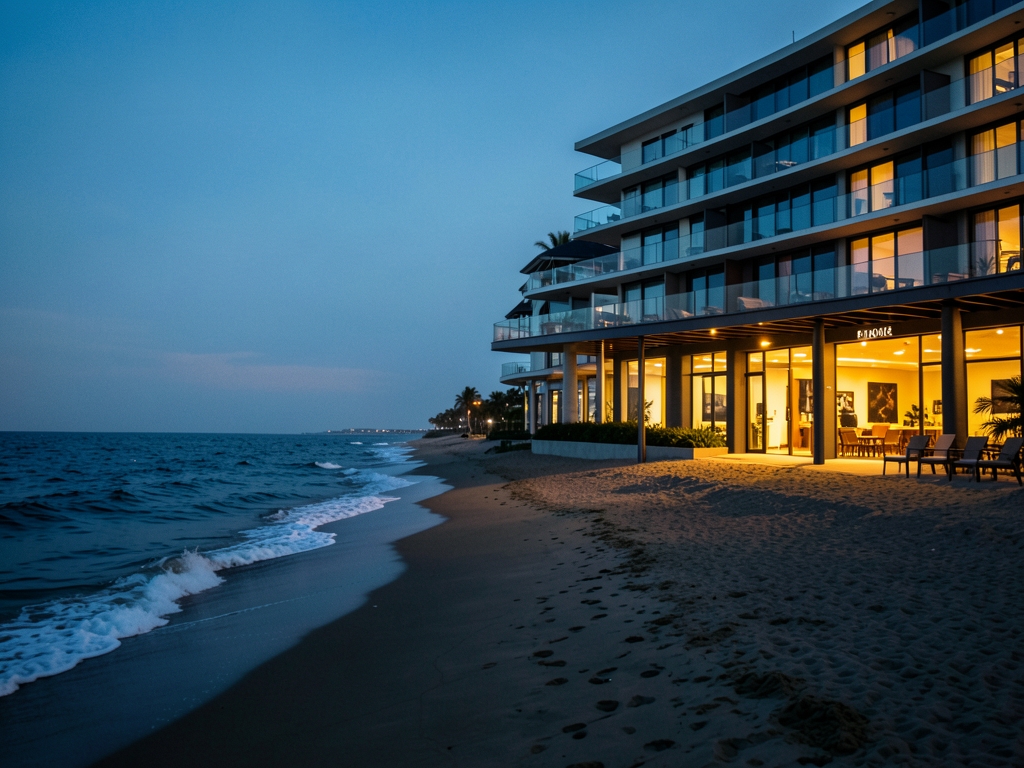
The second criterion is visual claim alignment. With AI capable of producing images from words alone, a "beachfront" photo shown next to a description may not be an actual photo of that specific unit. As shown by DrawGPT (drawgpt.ai), a language based AI can generate images from words without pulling from a fixed image set. For verification, the check is simple: confirm the view shown is tied to that exact unit on the live page, not just a general beachfront scene.
The third criterion is discovery weight. It is worth knowing why image claims are pushed so heavily in the first place. According to Top 20 beachfront marketing statistics 2026 (amraandelma.com), 59% of vacationers use it to explore destinations, view photos, and plan their trips. This figure does not apply to a discount, but it does justify holding image claims to the same level of proof as written claims when comparing like-for-like options.
As for numbers that matter, only $146 is a stated starting cost from the provided grounding, and only 59% is a stated usage figure. While dreamstime.com mentions "New users enjoy 60% OFF" for stock illustrations, that promotion has no verified connection to Miami beachfront hotel room rates. With those being the only figures available, the rule is to build a like-for-like total strictly from the live hotel's full terms, and to treat any other percentage or rate as unverified until it is shown on that exact page.
Common Mistakes
One of the first traps is mistaking the word "beachfront" for guaranteed direct access. An AI might write "direct beachfront access" for a Miami listing, but the live option could mean the building sits near the sand while the actual entry requires going through a shared lobby, a keycard gate, or a public walkway. The check here is simple: pull the exact access sentence from the live listing for that unit, not the headline adjective. If that sentence is vague, do not assume the shortest path to the water.
Another pitfall comes from overgeneralizing the word "pool." For example, a description could say "resort pool" and lead a reader to believe it is included for their booking, but the enforceable detail could be that only specific unit categories have pool privileges. Before committing, match the pool line to the exact unit type shown on the live booking screen. This is not about the size of the pool, but about who is actually allowed to use it for that exact option.
A third mistake is taking "included" at face value for gear. An AI might list "beach chairs included," but that phrase alone does not say if they are held for the stay dates, if they are first-come, or if they are only for certain guests. The reader must look for a line item that says "included" next to that exact item on the live "what's included" list. If that line item is missing entirely, it should be treated as not included, no matter how prominently it appears in the generated description.
These examples point to the same rule: generated text can assemble appealing phrases without checking a live policy. As shown by DrawGPT (drawgpt.ai), the system uses words to form descriptions with no fixed image set, which mirrors how amenity claims can be built from general terms instead of unit-specific facts. Because of that, the only reliable move is to verify the live, complete option before committing, and compare exact policy lines against each other, not marketing phrases.
Insider Tactics
Insider tactic: treat each amenity line as a hypothesis until it is tied to one sentence on the live, complete option. The useful question is not whether the claim sounds plausible, but whether the live page states it as a policy, an inclusion, or only as marketing copy. If the support is a photo caption or a generic resort description, leave the claim unverified and do not let it influence the commit decision.
Non-obvious strategy: verify the operating condition, not just the existence, of the amenity. A claim such as "generator" or "pool" is only decision-relevant when the live option also states availability hours, eligible guests, reservation rules, and whether use is included in the total. Compare the AI wording against that exact policy text, then compare like-for-like totals and terms before committing, because two listings can name the same amenity while attaching different fees or access rules.
Timing tip: anchor your verification to the property's published check-in window rather than to the moment you first read the description. Use the check-in window and starting rate stated on the live listing for your exact option (the La Fenice listing priced above is one worked example) as the point at which to re-check live policy text, because turnover is when access rules, pool hours, and inclusions are most likely to be updated. If the live page has no timestamp or policy block, treat the amenity claim as unverified.
A second non-obvious strategy is to separate "nearby" from "included." AI descriptions often make a beach, restaurant, or generator sound like part of the stay when the live option may only place it nearby or make it available for a fee. Build a two-column check—claim versus live support—and require the live support to name the same amenity, the same guest, and the same cost basis before you compare totals.
Finally, time your comparison so that every option is checked under the same conditions: same dates, same guest count, same currency, and same fee display. If one option shows a starting rate and another shows a total, convert only with the live option's own fee breakdown; do not estimate missing fees. This keeps the verification focused on the live, complete option and prevents a plausible AI sentence from becoming an unexamined commitment.
Comparison
This section alone compares options side by side with a winner. The two options are an AI-generated beachfront description and the live, human-verified listing it may resemble; the winner depends on whether the decision is exploratory or transactional.
Side by side, the numbers are not interchangeable. A live option such as La Fenice Beachfront Apartment starts at $146 for a night's stay, while a beachfront listing that omits flood-zone context can leave a buyer facing flood insurance costs of $8,000 per year. Separately, 59% of vacationers use photos and curated content to explore destinations, and new users on one stock-image site receive 60% off. Those figures describe different layers—rate, risk, attention, and asset cost—so they should be compared only within the same layer. The 59% figure is about traveler attention, not accuracy; the 60% discount is about image acquisition, not hotel pricing.
| Layer | AI-generated description | Live listing | Real number |
|---|---|---|---|
| Rate | Draft language only | La Fenice Beachfront Apartment | $146 starting nightly rate |
| Risk | May omit context | Complete terms | $8,000 per year flood insurance |
| Attention | Visual draft | Traveler-facing content | 59% use photos/content to plan |
| Asset cost | 3 scene / 21 courtyard illustrations | Not applicable | 60% off for new users |
When the AI-generated description wins: it is useful for early ideation, visual mood, or drafting amenity language before a live source is checked. Stock libraries list 3 generated beachfront scene illustrations and 21 generated beachfront courtyard illustrations, which shows how quickly visual variants can be produced. The 3 and 21 illustration counts are inventory signals, not quality scores; they help estimate how many visual directions can be generated quickly, not whether an amenity is available. It should not be treated as the complete option.
When the live listing wins: it wins before commitment, because the complete option includes the total terms and any cost that changes the comparison. A $146 starting rate and an $8,000 annual insurance exposure are not the same unit of comparison, but both must be visible before a like-for-like total is possible. Like-for-like comparison means matching the same room type, dates, fees, and terms before choosing; a lower starting rate can lose once omitted costs are added.
Winner: for any booking or purchase decision, the live, human-verified listing wins; the AI-generated description wins only as a draft to be verified.
Frequently Asked Questions
Why can an AI-generated Miami beachfront hotel description be inaccurate even if it sounds detailed?
Because the mechanism is prediction, not live lookup, as shown by DrawGPT (drawgpt.ai), where GPT-3 generates images from words alone without pulling from a fixed image set.
What exactly qualifies as a 'draft claim' in this verification process?
A 'draft claim' is any amenity stated in the AI text that has not yet been confirmed against the live option.
Where must I check to verify an amenity for a specific Miami beachfront hotel option?
The 'source-of-truth' is the live, complete listing page for the exact Miami beachfront hotel option you intend to commit to, not a cached summary or a general property page.
Can I rely on a general property page instead of the exact option's listing?
No, because there is no assumption that a general description carries over to the exact option, so each draft claim must be traced to that specific listing.
What does 'like-for-like' mean when comparing AI claims to live offers?
'Like-for-like' means comparing the same amenity under the same stated terms between what the draft says and what the live option shows.
What is the immediate mindset I should have when reading any AI draft for 2026 bookings?
The immediate check is to treat any AI draft as a suggestion, not a record of what is actually offered.
Quick answers
| What is the mechanism behind AI-generated Miami beachfront hotel descriptions? | The mechanism is prediction, not live lookup. |
| What does DrawGPT show about language-based AI? | A language-based AI can generate images from words alone using GPT-3 without pulling from a fixed image set. |
| How should an AI draft be treated before verification? | Any AI draft should be treated as a suggestion, not a record of what is actually offered. |
| What is a draft claim? | A draft claim is any amenity stated in the AI text that has not yet been confirmed against the live option. |
| What must happen before committing to an option? | Each draft claim must be traced to the source-of-truth, with no assumption that a general description carries over to the exact option. |
Also worth reading: Hartford hotels near downtown: 2026 Bradley airport weekend rates split by $48: Hartford hotels near downtown: 2026 · The definitive guide to choosing the perfect hotel for your trip: definitive guide to choosing the · How to grade Florida beach hotel copy: AI rubric scores 4/5 accept or rewrite: How to grade Florida beach